February 27, 2022. Three days into the war in Ukraine.
From my home in Espoo, I am mere hours from Russia, a border that has stayed quiet for eighty years.
I can scarcely believe that full-scale war has returned to the continent.
It threatens to strain an already frayed world order.
I send a text to Russian Foreign Minister Sergey Lavrov.

  “Please, please stop this madness. You are the only one who can stop him.”
  Lavrov replies within a minute: “Whom? Zelenskyy? Biden?”
  I’ve heard this line of defense from Lavrov before.
  This time it cannot stand. “No. You know what I mean,”
  I reply. “It’s gone too far. History is on your shoulders.”
  His next text parrots the usual Russian propaganda:
  claims of Russian culture bans and Russians murdered in Ukraine.
  I know Lavrov, and I know he’s smart enough to understand what’s going on.
  I try again. “There is no point in the blame game. This is about life and death. We need to stop this.”
  No dice. Lavrov continues with the same tropes.

I quit after the sixth fruitless message.
I feel angry and disappointed.
More than that, I feel the tectonic plates of history shifting.

  フィンランドの人口      550 万人
  ロシアの人口            1 億 4 千万人
  日本の人口              1 億 2 千万人   衆議院選挙議員数 465人 → 1 人あたり約 26,000 人(対総人口比率=0.0038%)
  東京都の人口            1 千 4 百万人
  大阪府の人口            880 万人
  茨城県の人口            280 万人
  つくば市の人口          26 万人
  観音台第二自治会の世帯数 112 戸          役員数 3人 → 1 人あたり約 37戸(対総人口比率=3/(112*3)=0.09%)
|
Alexander Stubb
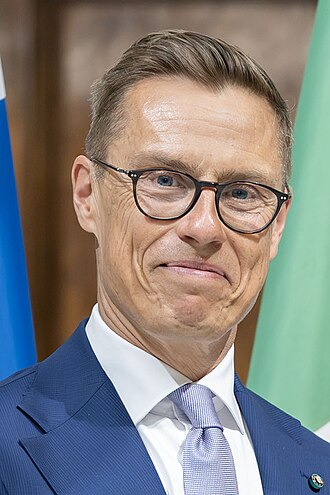 from Wikimedia
|
 from
from  from
from  from
from  from
from  from
from  from
from